You Don't Have to Explain the Money You Spent on Yourself. Here's What Changed My Mind.
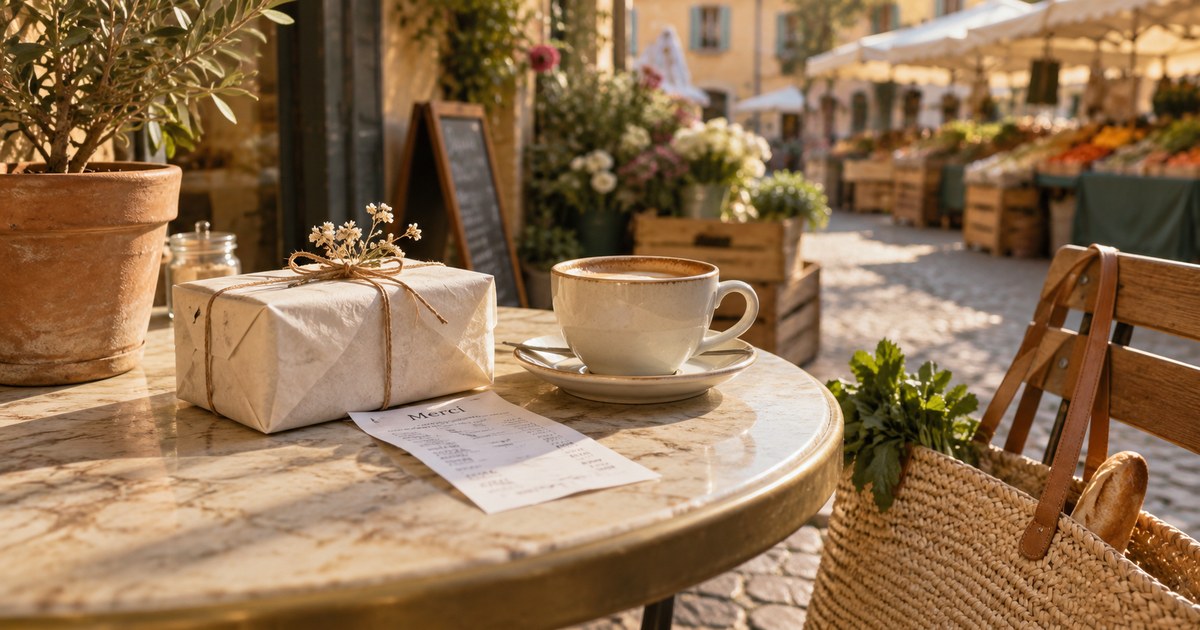
You know that particular feeling. You bought something small for yourself, a haircut, twenty minutes alone at a cafe with a coffee you didn't make at home, and before anyone in your house said a word about it, you'd already built the case. It's been months. I never do this. There was a sale. You rehearsed the sentence on the drive home the way you'd rehearse an excuse for a doctor's appointment you skipped, except nobody was asking. Nobody had to. You'd already convicted yourself before the receipt hit the counter.
Compare that to the last time you bought something for your kid, or your husband, or your mother. Sixty dollars for running shoes because his were falling apart, straight to the register, no debate. The same sixty dollars on a pair of jeans that actually fit you, and you're back at the shelf twice, doing the math on whether you really need them, whether the ones with the hole at the knee could last one more season. The money is identical. The guilt only shows up once it's you standing in the shoes.
The two bags on my kitchen table
I noticed my own version of this on a Saturday in June. I'd been to the market for a dinner with friends that night, and I came home with two bags. One had wine, a wedge of pecorino, good bread, a bunch of basil for the tomatoes, all of it bought without a second of hesitation because people I love were coming to eat. The other bag had a small tin of watercolors from the stationer's near the church, the same tin I'd walked past for three Saturdays running before I finally let myself buy it.
I set both bags on the table and looked at them for a while. The wine cost more than the paints. Nobody was going to ask me to justify the cheese. But I'd stood in that shop for a full minute turning the tin over, checking the price twice, telling myself I could always come back for it later, which is what you tell yourself about something you've already decided not to get. The dinner was for other people. The paints were only for me. That seemed to be the entire difference, and it embarrassed me a little, how automatic it was.
What I've been reading about the second half of that sentence
I've been back in Kristin Neff's writing on self-compassion this month, and one idea keeps catching me. She describes it as treating yourself with the same warmth you'd offer a friend in the same spot. Not more. Not a special exception carved out for you. The same ordinary care.
That reframes the guilt for me, because I would never make a friend explain a haircut. If Elena told me she'd bought herself flowers on a Tuesday for no occasion, I wouldn't ask what she was celebrating. I'd just be glad the kitchen was going to smell like something other than onions for a few days. The care is the same size either way. It's only when I turn it toward myself that I start asking for receipts.
What Elena said when I finally asked her
My neighbour Elena is seventy-three and she buys herself flowers most weeks from the stall by the church, small bunches, whatever's cheap and in season. I asked her once, half joking, if she ever felt strange spending money on something that wilts in four days. She looked at me like the question itself was the odd part. "Would you begrudge me a few flowers?" she said. "Then why would I begrudge myself?"
I didn't have a good answer. I still don't, not really. It wasn't a bigger philosophy for her. She'd just never learned to run herself through a different set of rules than everyone else in her life gets.
What I do differently now
I've started asking myself one plain question before I talk myself out of something small. Would I hesitate if this were for someone I love instead of for me? If the honest answer is no, I don't build the case anymore. I just buy the paints, or the coffee, or the twenty minutes at the cafe, and I let it be exactly as ordinary as it would be if it were for Elena, or for my daughter, or for a friend visiting for the weekend. Maintenance, not something I have to earn first. Just something I'm allowed.
It hasn't made me reckless. I still budget for the big things the same way I always did. What changed is smaller and quieter than that. I stopped treating the ten or twenty dollars I spend on my own upkeep as a moral event that needs a defense prepared in advance.
If you want a small place to practice this
This is a lot of what I had in mind when I made The Gentle Check-In Daily Journal. It costs about the same as a coffee and a pastry, and there's no case to build for buying it, no system to fail at. Just a small daily page for noticing the maintenance you already gave yourself that day, the walk, the ten minutes, the thing you almost talked yourself out of. It's the kind of small, unglamorous purchase this whole piece is about, the same size as the paints, or the flowers, or the jeans that actually fit.
No pressure at all if that's not what you need right now. But the next time you catch yourself rehearsing an explanation for something small you bought yourself, on the drive home or standing at the shelf with it in your hand, try leaving the explanation out. You don't have to earn it first. It isn't indulgence you owe anyone an account of. It's the same care you'd give anyone else you love, and you're allowed to give it to yourself too.