The Internet Discovered "Nonnamaxxing." I Just Live Here.
Sometime last month my inbox started filling up with the same word: nonnamaxxing. If you haven't run into it, it's the current name for a corner of the internet obsessed with how Italian grandmothers live. The slow mornings, the wool cardigan in September, the sauce that simmers for four hours because there's genuinely nowhere else to be, and the particular way an eighty-year-old woman folds a dish towel like it matters. Some of the videos have millions of views, all built around the same idea, that the fix for a burned-out life is to move more like a woman named Ada who has never once checked the time.
A dozen readers sent me some version of the same clip within a week, always with a version of the same line underneath it. This is basically you. I watched one of them standing at my own stove, stirring something that had, in fact, been simmering for four hours, and felt two things at once. Recognition, because that unhurried rhythm really is close to how my days go now. And a smaller, less comfortable feeling, because I'd already clocked what happens to a trend like this online. Three weeks after "nonnamaxxing" started trending, someone was selling a six-week "Nonna Reset" program off the back of it.
What the trend got right, before anyone packaged it
The impulse underneath nonnamaxxing has real substance to it. Sonja Lyubomirsky's research on what actually makes people happier keeps landing on the same unglamorous finding: small, chosen habits, repeated on purpose, move the needle, and one dramatic overhaul rarely does. A woman cooks the same soup every Tuesday because she likes cooking it. Over years, that adds up to a life built around a handful of things she'd choose again. That quiet accumulation is, more or less, the actual mechanism the internet is currently trying to bottle and sell back to people in six-week increments.
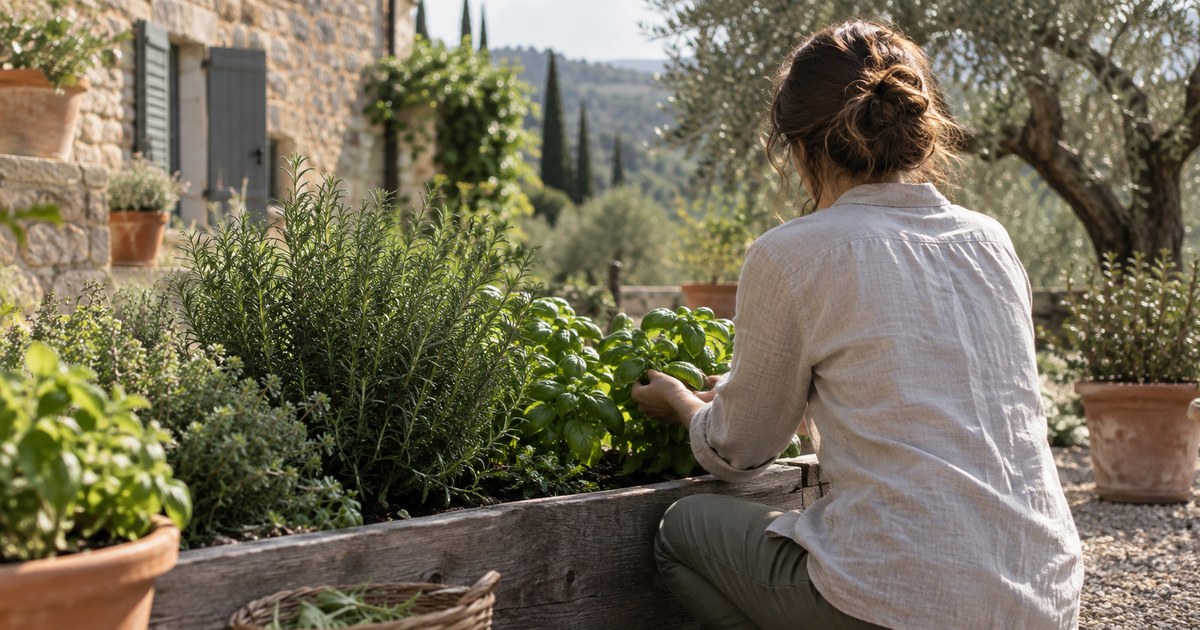
My neighbour Ada is eighty-one. She sells eggs and whatever the garden gives her at the Saturday market, and she has never heard the word nonnamaxxing and never will. Her hands are cracked at the knuckles from forty years of soil. She simmers her sauce for four hours because rushing it makes it worse, a fact forty years in that kitchen taught her long before anyone filmed it. There's no lighting, no caption. Nobody's watching her fold that towel but me.
The gap between the thing and the version that gets sold
What happens next is the part I recognize a little too well. Somebody with a phone and a good eye notices something true and slow and unbranded, films it beautifully, and within weeks a different kind of person shows up behind it selling certainty, a framework promising that the calm you saw in that video is purchasable in six modules. I don't think the people doing this are usually cynical. I think they've mistaken a feeling for a formula, the same way I once did with a program of my own, years ago, that promised to fix my sleep and my stress and mostly just fixed my bank balance.
Kristin Neff writes about the difference between performing self-compassion for an audience and actually practicing it when no one's watching, and I think something similar happens to entire aesthetics once they trend. What gets sold is a photograph of the soup, and the forty years that taught the woman stirring it to trust her own timing don't fit in the frame. That gap, between the real thing and the packaged thing, is exactly where I don't want to stand.
What I don't have
Nobody handed me a credential for any of this. I never went to nursing school, and I never got a nutrition license or sat for a therapy practice's certification. What actually happened instead was a divorce, then a small house outside a town in Tuscany I didn't plan very far ahead, where I picked up a habit of reading because a question wouldn't leave me alone, not a certificate waiting at the end of it. Kristin Neff on self-compassion. Sonja Lyubomirsky on what actually makes people a little happier. I read them the way you'd read a friend's underlined paperback, slowly, out of order, keeping the parts that stuck.
So when I catch myself half-tempted to package my own slow mornings into something with a name and a price tag, the honest answer is no. Structure's fine, on its own. I've just watched what a trend does to something true the moment it gets sold as a shortcut, and I'd rather stay the woman standing at the stove than become the photograph of her.
What I actually offer
What I have to offer a reader is an honest account of what I tried and what came of it, plus a disclaimer meant sincerely, that none of it is medical advice. When a reader asks me, gently or not, whether I'm just another version of what's trending this month, the truest answer I have is something close to: fair question. Here's the honest version, everything I share is just what's worked for me. Take it or leave it.
If you'd like to test that for yourself without handing over an email address or a credit card, I put together a free ten-minute practice called One Small Thing. It's exactly what the name promises, nothing more elaborate than that.
These days, before I hit publish on anything, I ask myself one plain question: did I actually do this, or am I just repeating something that looked good in a video I scrolled past. If the answer is the second one, it doesn't go up. It's a small rule, and it's slowed me down more than once.
I never did answer that video with the caption comparing me to nonnamaxxing. Instead I kept doing what I was doing before the word existed, stirring the same pot, at the same hour, for reasons that have nothing to do with a trend cycle. If Ada ever finds out the internet made a name for what she's been doing her whole life, I suspect she'll laugh, hand me a bag of eggs, and go back to her garden. I read. I wrote down what I found. That's the closest thing to a credential I actually have.