My Friend Turned Fifty-Five and Nobody Asked What She'd Learned. Here's What I Did With That.
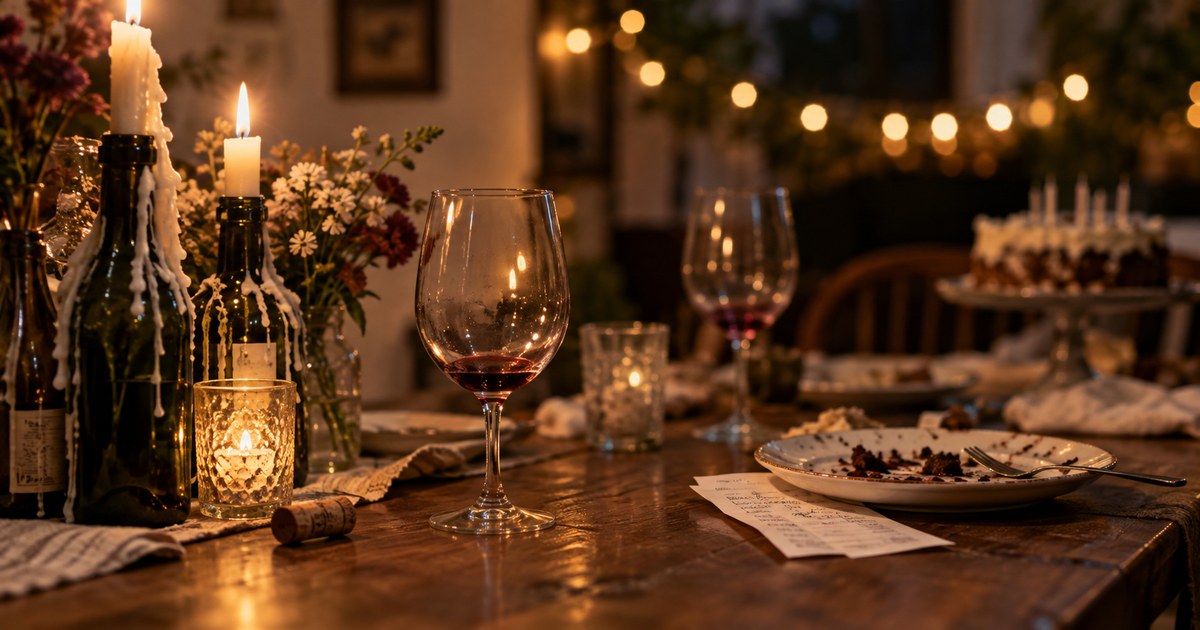
Patricia called me on a Sunday afternoon in June, a few days after her own birthday dinner, and the first thing she told me about was a receipt. She'd found it folded into a small square at the bottom of her purse, tucked behind a parking stub from the restaurant, three sentences written on the back in her own handwriting. She'd jotted them down in the car beforehand, she said, just in case somebody asked.
Nobody asked. Her son picked the wine and told a long story about a client in Denver. Her daughter-in-law wanted to know if she'd hit traffic on the drive down. Her grandson showed everyone the same video on his phone twice. When the cake came out, they sang, and her son-in-law raised his glass and said, "To Mom, fifty-five and still going," and the whole table laughed and drank to that. It was, Patricia told me, a genuinely lovely evening. She just kept waiting for the moment someone would turn to her and ask what fifty-five years had taught her, and the moment never came. The check came instead.
The three sentences on the receipt
I asked what she'd written. She read them to me over the phone, a little embarrassed, like she was confessing to something small and strange. That she'd stopped needing everyone in a room to like her, and it had taken her almost fifty years to notice how much energy that used to cost. That most of the fights she once thought were about being right were really about being scared. That the things she'd spent decades worrying people would notice about her, nobody ever noticed at all, because everyone else was just as busy worrying about themselves.
She'd worked on those three lines in the car, not to give a speech, just so she'd have something ready in case the door opened even a crack. It never opened. She told me she felt a little foolish having prepared an answer nobody had asked the question to, and then she found the receipt again a week later while clearing out old parking stubs, and read her own handwriting like it belonged to someone she used to know.
Why we wait for the door to open
I understood exactly what she meant, because I've done the same thing more times than I'd like to count. I've had answers ready. I've rehearsed the short version of what changed since the divorce, since Tuscany, since I started actually reading instead of just surviving, and I've sat through entire dinners where nobody asked, and said none of it, as though what I'd learned only counted once somebody requested it first.
It's such a small, ordinary kind of waiting that you can go years without noticing you're doing it. You answer the question that gets asked, the one about the drive or the traffic or whether you want more wine, and you file the real answer away for later, and later has a way of never arriving on its own. Patricia said she almost brought it up herself, once, between the appetizer and the entrée. Then her grandson leaned over with his phone again, and the moment closed like a door she hadn't quite reached in time.
I've been reading Kristin Neff's work on self-compassion again this year, and one idea of hers keeps surfacing while I think about Patricia's receipt. She writes about common humanity, the sense that our struggles connect us instead of setting us apart, and I think the flip side is true too. If a friend told me she'd figured something real out about herself, I wouldn't wait for her to bring it up twice. I'd want to hear it the first time. But I'd been treating my own fifty-two years like a fact that only became real once someone else confirmed they wanted to know it, which is a strange way to treat your own life once you notice it happening in daylight.
What I started doing with my own list
After Patricia's call, I went looking for my own version of that receipt. Mine lives in the back of a kitchen notebook, half grocery lists and half lines I've underlined in books, and there it was once I looked: things I know now that I didn't at thirty. That rest isn't something you earn first and receive after. That most of what felt like failure at the time was just information arriving late. That my neighbor Elena was right about the lemon balm, and about several other things I only understood years after she'd already said them, standing at her fence in her gardening apron like it was nothing.
Nobody had asked me to write any of it down either. I did it anyway, a line at a time, on whatever day it happened to occur to me. It turns out the question doesn't need to come from someone else's mouth to be worth answering. You're allowed to ask it of yourself, and then sit with what comes back.
Somewhere to keep it
That's most of why I put together a small printable workbook called The Small Things I Know Now (That I Didn't at Thirty). It isn't a memoir and there's no test with right answers inside it. It's mostly gentle prompts and open space, somewhere to write down your own version of Patricia's receipt before it ends up folded at the bottom of a purse, or before you forget you ever knew it in the first place. It's fifteen dollars, if you'd like a copy for your own kitchen table.
Patricia kept the receipt, by the way. She moved it from her purse to her wallet, somewhere she'll actually see it. Nobody has to ask you what you know for it to be true. You already know it. Write it down anyway.